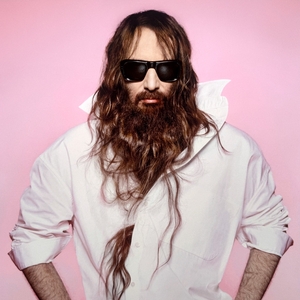
Sébastien Tellier
About this event
Sébastien Tellier is an exceptional, highly personal & intimate artist echoing such other one-offs as Robert Wyatt, Syd Barrett or Serge Gainsbourg. His first LP, L'incroyable vérité (The Incredible Truth) (2001), was a fantastical pop album, which careered from lo-fi electronica to bizarre cabaret tunes. Its sleeve featured Tellier in full evening dress on the front, while the back of jacket had a shot of him cavorting in some playboy’s pool. He instructed listeners to only listen to the album by candle light and won a tight band of adherents, who fell for his lush, humorous compositions. Standout track, Fantino, was chosen by Sofia Coppola for the Lost in Translation soundtrack. Sebastien followed this with Politics (2005), which, like his third studio album Sexuality (2008), took single term as both its title and theme. The disc dealt with ways of power and governance, in as much as it discussed the relative merits of genocide versus ketchup, as well as the tennis-playing opportunities presented by the Berlin Wall. Politics’ most prominent song was La Ritournelle, a sublime, string-led tune, which featured Nigerian drummer, Tony Allen, some eighteen months before he joined Damon Albarn for The Good the bad and the queen. La Ritournelle’s international success transformed Sebastien’s life professionally, sexually and domestically. “Many things have changed since La Ritournelle,” he says with a laugh, “now I’m living in a new apartment, I have a new girlfriend and a really beautiful sofa.” Since Politics release he also recorded an acoustic album of his more popular songs, Sessions (2006), which topped the French iTunes chart; this was repackaged for the British market as Universe (2006), to include both highlights from the French CD, as well as compositions from his score to the film Narco. His growing popularity has won him some well-known fans. Once the smart, artsy kid from the 17th Arrondissement could count only one hip musical connection: his father played w
Location
San FranciscoGet directions